

Khmer food is best approached as a cuisine of rice, fresh herbs, soups, grilled meats, river and sea fish, fragrant curry pastes, and fermented ingredients. It can be spicy, but chilli is not usually the only or dominant flavour: sourness, saltiness, sweetness, citrus, lemongrass, galangal, turmeric, pepper, and prahok all matter.
For a first visit, begin with a noodle breakfast, a shared lunch of rice with two or three dishes, and one or two more distinctive flavours such as fish amok or prahok ktis. This guide explains what to look for on a menu, how to order without overcomplicating things, and how to eat respectfully. For a wider overview of ingredients and classic dishes, see our guide to Cambodian food and cuisine.
What Cambodian food is like
Rice is central to everyday meals. A typical lunch or dinner may include steamed rice with a soup, a stir-fry or grilled dish, vegetables, and a dipping sauce. Rather than ordering one rich main course per person, groups often share several dishes and build each spoonful with rice.
Two ingredients help explain many Khmer flavours:
- Kroeung is a fresh aromatic paste, commonly made with ingredients such as lemongrass, galangal, turmeric, garlic, makrut lime leaf, and fingerroot. It gives curries, soups, and stir-fries their distinctive depth.
- Prahok is fermented fish paste. It can be prominent, but is often used in small amounts as a savoury seasoning rather than served as the main ingredient.
Do not assume that every Khmer dish is mild, or that every dish described as a curry resembles an Indian or Thai curry. Recipes vary between households, cooks, regions, and restaurants. Chilli, pickles, and dipping sauces may arrive separately, which gives you more control over heat.
Essential Khmer dishes to try
| Dish | What it is | Best for |
|---|---|---|
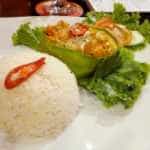
| Fish amok | Fish cooked with coconut and kroeung, often steamed in a banana-leaf cup. | A gentle first Khmer curry-style dish. |
| Lok lak | Stir-fried or seared beef, usually served with rice, salad, and a lime-and-pepper dip. | Travellers wanting a familiar, approachable meal. |
| Kuy teav | Rice-noodle soup, often made with pork or beef broth and served with herbs, lime, and condiments. | Breakfast or a straightforward first street-food order. |
| Num banh chok | Rice noodles with a green fish-based gravy, herbs, and fresh vegetables. | A classic morning dish with lighter, herb-led flavours. |
| Bai sach chrouk | Grilled or fried pork over rice, often with pickles, cucumber, and a small bowl of broth. | A common, filling breakfast. |
| Samlor machu | A Khmer sour soup. Recipes vary, but tamarind, vegetables, fish, meat, or herbs may feature. | Trying the sour, fresh side of Khmer cooking. |
| Prahok ktis | A creamy fermented-fish dip, often eaten with vegetables and rice. | Trying prahok in a more approachable form. |
| Num pang | A Cambodian baguette sandwich, reflecting the country’s French colonial influence. | A quick snack or simple lunch on the move. |
Fish amok is widely offered in restaurants, particularly those serving visitors, and is a useful introduction to Khmer flavours. However, do not stop there. Everyday dishes such as grilled pork with rice, noodle soups, sour soups, vegetable stir-fries, and rice noodles often give a clearer sense of what people eat regularly.
What to order if you are new to Khmer food
If you are eating alone, choose one complete dish rather than trying to assemble a large shared meal. Kuy teav, bai sach chrouk, lok lak, fried rice, or a simple noodle dish are easy places to start.
For two or more people, a practical first Khmer meal is:
- one fish, meat, or tofu dish;
- one vegetable dish;
- one soup, if available; and
- rice for the table.
For example, fish amok with stir-fried morning glory and rice works well for two people. Add a sour soup for a larger group. If a menu is long, ask which dishes are Khmer specialities, then choose one familiar option and one dish you have not tried before.
At small stalls, it is often easier to order the speciality the cook is preparing continuously. A queue for one noodle soup, grilled pork and rice, or rice-noodle dish is usually a better sign than a stall displaying many dishes that have been sitting out for a long time. Our guides to Phnom Penh street food and Siem Reap street food have more practical advice for choosing stalls and ordering in the country’s two main visitor cities.
How to eat Khmer food respectfully
In casual restaurants, you may receive an individual plate, spoon, and fork. The spoon is normally the main eating utensil, while the fork is used to guide food on to it. Chopsticks are common for some noodle dishes, particularly where Chinese-Cambodian cooking is involved.
When food is shared, take a small portion at a time and leave enough for everyone. Use a serving spoon if one is provided, rather than eating directly from shared dishes. It is also considerate to wait until everyone has been served, or to follow the lead of your host if you have been invited to eat in someone’s home.
Street stalls and market counters are working places, not performances. Join the queue, keep your order clear, and be patient when a vendor is busy. Pointing to a dish, showing a photograph, or using a translation app is perfectly acceptable. If a price is not displayed, ask before ordering, especially for seafood, mixed grills, and food sold by weight.
Food in Phnom Penh, Siem Reap, Kampot, and the islands
Khmer dishes travel throughout Cambodia, so do not expect completely separate regional cuisines at every stop. The practical difference is usually the setting, available ingredients, and the kind of menu you will find.
- Phnom Penh: the widest everyday choice, from breakfast stalls and market food to established Khmer restaurants. It is particularly good for trying kuy teav, bai sach chrouk, num pang, and Chinese-Cambodian noodle dishes.
- Siem Reap: easy for first-time visitors because many restaurants have English menus, but it is worth seeking out small morning stalls as well as evening markets. Breakfast is one of the best times to try noodle soups and rice dishes.
- Kampot and Kep: coastal produce becomes more prominent. Fresh seafood is a natural choice, while Kampot pepper is a useful ingredient to look for on menus. Kep is especially associated with crab cooked with green pepper.
- Koh Rong and Koh Rong Samloem: seafood and simple Khmer rice dishes are common, but choice can be narrower than in Phnom Penh or Siem Reap. If you have a strict diet or serious allergy, discuss it with your accommodation or restaurant before relying on a complicated menu adaptation.
Vegetarian, vegan, and allergy considerations
Vegetable dishes are not automatically vegetarian or vegan in Cambodia. Fish sauce, prahok, shrimp paste, oyster sauce, meat stock, seasoning powder, egg, and shared cooking oil can all appear in dishes that seem plant-based on a menu.
For a preference, it is reasonable to ask whether a dish can be made without meat or fish. For a strict diet or allergy, be more specific: ask about sauces, paste, stock, oil, and whether the food can be cooked separately. Tofu, rice noodles, fried rice, and vegetable soups also need checking rather than assumption.
Read our detailed guides to vegetarian and vegan food in Cambodia and travelling in Cambodia with food allergies before your trip if your requirement is strict or medically serious.
Street food and drinking safely
Street food can be a rewarding part of travelling in Cambodia, but use the same judgement you would anywhere. Choose busy vendors with visible cooking, good turnover, and food that is cooked to order and served hot. Be more cautious with food that has been sitting at room temperature, raw foods whose preparation you cannot assess, and drinks made with water of uncertain quality.
Use sealed bottled water or reliably treated water for drinking, and consider the source of ice if you are unsure. The CDC’s Cambodia travel-health guidance has current food and water precautions for travellers, particularly useful for people who are pregnant, immunocompromised, travelling with young children, or managing a health condition.
The key point
The best Cambodian food experiences are usually simple: try a breakfast noodle stall, order rice with shared dishes at lunch or dinner, add chilli gradually, and do not avoid prahok simply because it sounds unfamiliar. Start with fish amok, kuy teav, bai sach chrouk, lok lak, or num banh chok, then use each meal to try one new flavour or ingredient.
Khmer food rewards curiosity, but it does not require bravery for its own sake. Choose freshly cooked food, ask clear questions where ingredients matter, and let the dish a stall does best guide your order.

Comments