

Ta Nei is a small, late-12th-century Buddhist temple in the forest near Ta Keo in Angkor Archaeological Park. It is worth adding to your day if you have already seen Angkor’s headline temples and want a quieter stop with weathered carvings and a more ruin-like setting.
The trade-off is access. Ta Nei is not usually included on standard coach-tour itineraries, and reaching it involves an unpaved forest approach rather than a straightforward temple forecourt. Allow roughly an hour, including the approach, and treat it as an extra stop alongside Ta Keo, Ta Prohm, or a slower Small Circuit day rather than a replacement for Angkor Wat or Bayon.
Where is Ta Nei Temple?
Ta Nei lies in the central Angkor area, north of Ta Keo and within reach of Ta Prohm. It is covered by the Angkor Pass, but it does not sit directly on the usual paved Small Circuit route.
The temple is reached by a narrow forest road or track, commonly approached from the Ta Keo area. Conditions and vehicle access can change with weather, conservation work, and the route in use, so tell your driver that Ta Nei is a specific stop before setting off. Do not assume every driver will know the current turning point or be willing to take an open-sided tuk-tuk along the rougher approach.
For most independent visitors, a tuk-tuk with an experienced Angkor driver is a practical option. A private car can be more comfortable in very hot or wet weather, but may still need to stop before the temple itself. Our guide to transport from Siem Reap to Angkor Wat and the temple park explains the differences between tuk-tuks, cars, bicycles, and organised tours.
Is Ta Nei worth visiting?
Yes, provided you approach it with the right expectations. Ta Nei is not a grand, fully restored monument on the scale of Angkor Wat, Bayon, or Preah Khan. It is a compact temple complex associated with the reign of Jayavarman VII and the Bayon style, where the appeal lies in the forest setting, surviving Buddhist carvings, and relative quiet.
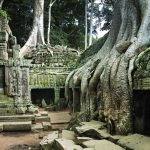
The temple has a fragmented, overgrown character compared with Angkor’s major monuments. Look closely at the Buddhist pediments and lintels, and allow time to explore at an unhurried pace rather than trying to add it to an already packed temple list.
Choose Ta Nei if you:
- have at least two Angkor days, or a deliberately unhurried one-day itinerary;
- want a lower-crowd temple without travelling far beyond the central park;
- enjoy forest settings, ruined architecture, and detail photography;
- are comfortable with an unpaved approach and uneven historic ground.
Skip it on a first, tightly timed Angkor day if it would mean rushing Angkor Wat, Angkor Thom, Bayon, or Ta Prohm. For that kind of visit, the Small Circuit and Grand Circuit comparison will help you set more realistic priorities.
How to fit Ta Nei into an Angkor itinerary
Best pairing: Ta Keo and Ta Prohm
Ta Nei works well as a detour around Ta Keo and Ta Prohm. Ta Keo is large, exposed, and monumental; Ta Nei is compact, shaded, and generally much less visited. Seeing both provides a useful contrast between a prominent temple-mountain and a more intimate forest ruin.
A sensible sequence is to visit Ta Keo, continue to Ta Nei while you still have energy for the approach, then continue towards Ta Prohm or Banteay Kdei. Do not plan Ta Nei immediately after an Angkor Wat sunrise if you are also trying to cover Bayon and Ta Prohm at a leisurely pace: that is likely to make for a rushed, hot day.
Best on a two-day Angkor visit
For many first-time visitors, Ta Nei is better on day two. Use day one for Angkor Wat, Angkor Thom and Bayon, and Ta Prohm. On another day, add Ta Nei to a route that includes Ta Keo and other smaller temples, leaving enough time for the approach and any route changes.
If you are unsure whether to arrange a guide, Ta Nei is a place where a knowledgeable guide can add context to the carvings and layout. An independent visit, meanwhile, suits travellers who mainly want time to explore and photograph at their own pace. Read our comparison of an Angkor guided tour and self-guided visit before booking.
Tickets and practical access
Ta Nei is included with a valid Angkor Pass; there is no separate Ta Nei admission charge. Check the official Angkor Enterprise ticket page for current pass types, prices, sales arrangements, and visitor information before travelling.
Individual temple access times and routes can change, particularly during poor weather or conservation work. Check current information with your driver, guide, or accommodation shortly before visiting, and avoid relying on a general Angkor opening window for a late Ta Nei stop.
| Practical point | What to expect |
|---|---|
| Ticket | Included with a valid Angkor Pass |
| Time to allow | About 45 minutes to one hour, including the approach |
| Access | Forest track from the Ta Keo area; the final approach may involve walking |
| Transport | Arrange a driver or guide familiar with the current route |
| Facilities | Do not expect food, shops, or reliable facilities at the temple itself |
What to wear and bring
Dress as you would for other Angkor temples: cover shoulders and knees, particularly if you are combining Ta Nei with active religious sites. Wear shoes with grip rather than flip-flops. Historic surfaces can be uneven, and the approach may be dusty in dry conditions or slippery after rain.
Carry water, sun protection, and rain protection in the wet season. Ta Nei has more shade than many open temples, but it is sensible to arrive with water after a long morning of sightseeing. Insect repellent can also be useful if you are visiting later in the day or spending time around the forest approach.
Stay on accessible routes, avoid climbing on unstable-looking masonry, and do not touch carvings or move stones. Ta Nei’s appeal comes partly from its less heavily presented condition, which also means visitors should take extra care around damaged structures.
Photography at Ta Nei
Ta Nei is better for texture, stone detail, doorways, roots, and quiet architectural scenes than for wide, symmetrical postcard views. The surrounding trees create patchy light, especially around midday, so cloudy conditions can help when photographing carvings and weathered surfaces.
Bring a camera or phone that handles lower light well, but avoid blocking narrow passages with tripods or treating the temple as an empty set. The best photographs usually come from working patiently with the available shade and respecting other visitors’ space. For wider Angkor planning, including light, etiquette, and realistic expectations around sunrise, see our Angkor Wat photography guide.
The key point
Ta Nei is a rewarding Angkor addition for visitors who want a quieter temple in a forest setting, but it is not an essential first-stop sight. Visit after the major temples, pair it with nearby Ta Keo and Ta Prohm, arrange transport with someone who understands the current access route, and allow enough time to enjoy the approach rather than treating it as a rushed detour.

Comments