

Three full days gives most first-time visitors enough time to explore the Old Quarter, see Hanoi’s principal historic sights without rushing, eat well, and leave room for café stops and traffic delays.
This itinerary is designed for travellers staying in the Old Quarter or near Hoan Kiem Lake. The first day is walkable, while the second and third use short car rides where they make more sense than crossing busy roads in heat or rain. For a broader overview of neighbourhoods, hotels, and sights, see our Hanoi travel guide.
Before you start: keep the plan flexible
Hanoi is compact on a map, but central pavements can be crowded, traffic can slow short car journeys, and afternoon heat or rain can make an ambitious walking route tiring. Plan one or two substantial sights each day, rather than treating every museum and monument as essential.
Walk within the Old Quarter, around Hoan Kiem Lake, and through the French Quarter. For Ba Dinh, the Temple of Literature, West Lake, or Truc Bach, a Grab car or reliable taxi is usually more practical. Our guide to getting around Hanoi explains when walking, ride-hailing, taxis, buses, and the metro make most sense.
If your three days include a Monday or Friday, do not build the itinerary around entering the Ho Chi Minh Mausoleum. Visits inside are generally limited to selected mornings, and the mausoleum also has an annual maintenance closure. Check current visiting arrangements on the Mausoleum Management Board website shortly before you go. If entry is unavailable, follow the rest of the Ba Dinh route and allow more time for the surrounding sites.
Day 1: Old Quarter, Hoan Kiem Lake, street food, and an evening show
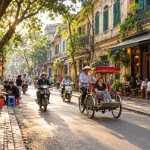
Use your first day to get your bearings. The Old Quarter is best experienced slowly, with time to take side streets, stop for food, and accept that the most interesting parts are often not major sights.
Morning: breakfast and a loose Old Quarter walk
Begin with phở or bánh cuốn for breakfast, then walk towards Hoan Kiem Lake. From there, explore the Old Quarter without trying to cover every street. The area is organised around old trading lanes, but it is more rewarding to follow what catches your interest than to chase a rigid route.
Useful places to pass through include the streets north of the lake, the area around Dong Xuan Market, and the smaller temples and shop-house lanes away from the busiest souvenir streets. Keep Hoan Kiem Lake in mind as an easy point of reference when you need a break or lose your sense of direction.
Lunch: eat one Hanoi speciality well
Make lunch a proper stop rather than a snack grabbed while walking. Bún chả is a particularly good first choice at lunchtime: grilled pork, rice noodles, herbs, and dipping broth make a satisfying meal after a morning on foot. If you prefer something lighter, look for bún thang, bánh cuốn, or a bowl of noodle soup.
For help choosing dishes and understanding when to look for them, read our Hanoi street food guide. Avoid trying to visit a long list of famous addresses across the city; a specialist local place near where you are is usually a better use of limited time.
Afternoon: lake, coffee, and a slower second walk
After lunch, return to the streets around Hoan Kiem Lake for a coffee break. Egg coffee is worth trying here, but treat it more like a rich dessert than an ordinary coffee. This is also a good time for small snacks, a browse through bookshops or independent shops, and a quieter walk around the southern and eastern sides of the lake.
If the weather is wet or uncomfortably hot, make this a deliberately slow afternoon rather than forcing another long outdoor route. A café, a museum visit, or an extended lunch is a sensible use of the time.
Evening: water puppets or a food-focused night
For a classic first-night cultural activity, book a performance at Thang Long Water Puppet Theatre beside Hoan Kiem Lake. Shows, ticket availability, and timings can change, so confirm directly with the theatre before planning dinner around it.
Alternatively, use the evening for a food walk. Choose a different dish from lunch, then finish with chè, fruit, or another coffee. The Old Quarter is liveliest after dark, but you do not need to stay around the busiest beer streets to enjoy it.
Day 2: Ba Dinh, the Temple of Literature, and West Lake
This is the most historically focused day, combining Hanoi’s principal political and cultural landmarks with a calmer evening away from the Old Quarter.
Morning: Ba Dinh Square and the Ho Chi Minh complex
Start early in Ba Dinh. The Ho Chi Minh Mausoleum, Ba Dinh Square, the Presidential Palace grounds, Ho Chi Minh’s Stilt House, and One Pillar Pagoda sit close together, so they work best as one connected visit rather than separate stops on different days.
If you intend to enter the mausoleum, check its current opening days, seasonal timetable, security rules, and closure dates in advance. Dress modestly, with shoulders and knees covered, and allow extra time for queues and security. Even when entry inside is unavailable, it is still worth checking which surrounding sites are open on the day of your visit.
Lunch and early afternoon: the Temple of Literature
Take a short ride south to the Temple of Literature. Its courtyards and traditional architecture provide a welcome contrast to the traffic outside, and around 60 to 90 minutes is usually enough for a first visit. It is best approached as a place to wander and understand Hanoi’s scholarly history, rather than a sight that needs a guided half-day.
Eat nearby afterwards, or take a car back towards the centre for lunch. Do not try to walk all the way from Ba Dinh to the Old Quarter in the middle of a hot or wet day unless you genuinely enjoy urban walking.
Late afternoon and dinner: West Lake, Truc Bach, or Ngũ Xã
Finish the day with a change of pace around West Lake or smaller Truc Bach Lake. This part of Hanoi is less dense and less convenient for a first-time sightseeing morning, but it is ideal after the Ba Dinh route.
If you want another distinct Hanoi food experience, continue to Ngũ Xã beside Truc Bach for phở cuốn: fresh rice-noodle rolls commonly filled with beef and herbs. It is a useful alternative to another Old Quarter dinner, particularly if you prefer a quieter evening.
Day 3: French Quarter, one museum, and a final unhurried afternoon
Use the final day for the city’s colonial-era centre and one museum chosen for your interests. This is deliberately less packed than the first two days, giving you time to revisit a favourite food stop, shop, or simply absorb the city before travelling onwards.
Morning: Hoa Lo Prison and the French Quarter
Begin at Hoa Lo Prison Relic, a compact museum that gives important context to Vietnam’s colonial history and later twentieth-century conflicts. It is close enough to the French Quarter and Hoan Kiem area to combine easily with a morning walk. Check current opening information and any holiday arrangements on the official Hoa Lo Prison Relic website before setting out.
Afterwards, walk through the broad streets around the Opera House and the French Quarter. The contrast with the Old Quarter is part of the appeal: larger buildings, wider roads, and a more spacious layout. Stop for lunch or coffee rather than trying to turn this into a long checklist of landmarks.
Afternoon: choose one museum, not several
For a strong all-round historical option, visit the Vietnam National Museum of History. It is near the French Quarter and commonly operates in morning and afternoon sessions with a midday break; check the museum’s current opening information before you go, especially if you are visiting on a Monday or around a public holiday.
An alternative is the Vietnamese Women’s Museum, which is closer to Hoa Lo and often suits travellers looking for a more focused social and cultural perspective. Pick one museum and give it proper time. Trying to squeeze both into a final afternoon usually turns the day into a series of rushed taxi rides and galleries.
Final evening: repeat what you enjoyed most
Return to the Old Quarter or Hoan Kiem area for your last evening. This is a good opportunity to order the dish you did not manage to try on day one: perhaps chả cá, bún đậu mắm tôm if you are comfortable with its strong fermented shrimp paste, or another bowl of phở.
If your onward travel is not early the next morning, keep the evening simple. Hanoi is often most enjoyable when there is no next attraction to reach: a meal, a coffee, a lakeside walk, and time to watch the city move around you are a fitting end to three days.
Rainy-day, hot-weather, and slower-paced adjustments
In sustained rain, keep day one centred on cafés, food stops, a water-puppet performance, and one indoor museum. Use cars rather than walking between districts, as wet pavements, traffic, and spray can make short routes unpleasant.
In hot, humid weather, start outdoor sights early, take a proper indoor lunch break, and move the Old Quarter walk to late afternoon. The Ba Dinh route is best done in the morning regardless, particularly if the mausoleum is part of your plan.
If you prefer a slower pace, remove either the Temple of Literature or the French Quarter museum day, rather than shortening every stop. Three good meals, one museum, a few historic sites, and time around the Old Quarter will give you a better first impression of Hanoi than an exhaustive list of attractions.
The key point
A realistic three-day Hanoi itinerary groups the Old Quarter and Hoan Kiem Lake together, gives Ba Dinh its own morning, and saves the French Quarter and one carefully chosen museum for the final day. Build in food and coffee stops, use ride-hailing for longer cross-city journeys, and keep one part of each day flexible for weather, energy levels, or somewhere you want to explore for longer.
Comments