

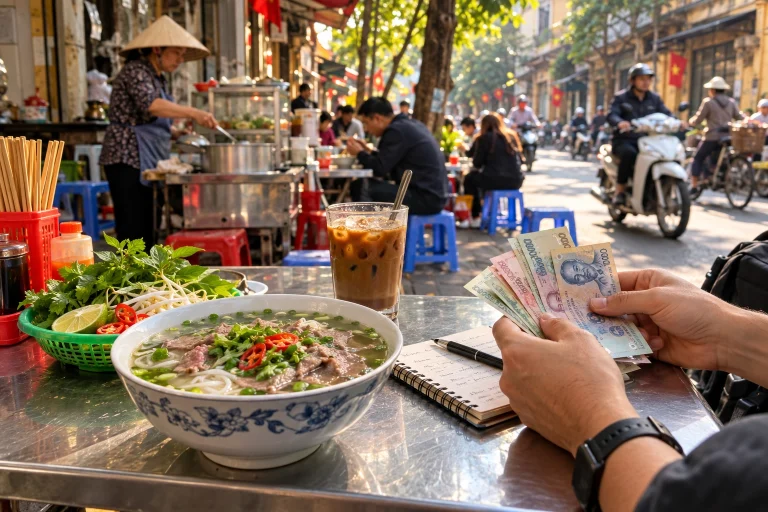
A realistic Vietnam travel budget starts at around 700,000–1,100,000 VND per person per day for a careful backpacker, while most travellers wanting a private room, regular cafés, restaurants, and paid activities should allow 1,500,000–2,800,000 VND per day. A higher-comfort trip with good hotels, domestic flights, organised tours, and occasional splurges can easily reach 3,000,000–5,500,000 VND or more per day.
These are planning ranges rather than fixed prices and are most useful for ordinary travel days. Your final total depends less on bowls of phở than on accommodation standard, domestic transport, and larger choices such as a Ha Long Bay cruise, a multi-day trek, or time at an island resort. The estimates exclude international flights, visas, travel insurance, and shopping.
Vietnam daily budget at a glance
| Travel style | Typical daily budget | What it normally covers |
|---|---|---|
| Backpacker | 700,000–1,100,000 VND | Dorm bed or very simple room, street food, local buses or ride-hailing motorbikes, and inexpensive sights. |
| Mid-range | 1,500,000–2,800,000 VND | Private hotel room, a mix of local and tourist-oriented restaurants, taxis or ride-hailing, and regular paid attractions. |
| Higher comfort | 3,000,000–5,500,000+ VND | Good boutique or international-standard hotels, restaurant meals, private transfers or flights, tours, spas, and drinks. |
Mid-range travellers sharing a double or twin room can reduce the per-person figure noticeably. Solo travellers, meanwhile, carry the full room cost, so accommodation is usually the biggest difference between their budget and that of a couple.
What accommodation costs in Vietnam
Accommodation varies sharply by destination and season. Hostel dorm beds may start at around 120,000–200,000 VND outside busy periods, while a basic private room can cost roughly 350,000–700,000 VND per night. A well-reviewed three- or four-star hotel may range from around 800,000–2,000,000 VND per room, although central locations, weekends, and peak travel dates can push rates much higher.
Hanoi’s Old Quarter, central Ho Chi Minh City, Hoi An’s old town area, Ha Long Bay, and Phu Quoc are among the places where prices can rise quickly. Tet, Vietnamese public holidays, Christmas and New Year, and popular beach periods are good times to book early if keeping costs down matters.
For a lower total, stay a short walk rather than directly beside the main tourist streets, and compare the full room rate rather than the headline price. Breakfast, taxes, airport transfers, laundry, and cancellation terms can all alter the value of a deal.
Food and drink: cheap local meals, higher tourist-area bills
Food can be one of the easiest parts of a Vietnam trip to control. A simple street-food meal may cost around 25,000–50,000 VND, while a casual local restaurant meal is often around 80,000–150,000 VND. Tourist-focused restaurants, international food, cocktails, craft beer, and hotel dining can raise the daily food budget quickly.
A practical daily allowance is:
- 200,000–350,000 VND: street food, local coffee, fruit, bottled water, and a modest beer or two.
- 400,000–800,000 VND: a comfortable mix of local restaurants, cafés, snacks, and occasional Western food.
- 1,000,000 VND or more: sit-down dining, cocktails, international restaurants, and frequent café stops.
Do not assume that every low-cost meal is cashless. Small food stalls, markets, local cafés, and minor transport costs may require Vietnamese đồng, even though hotels, flights, larger restaurants, and established tour companies may take cards. Our guide to money, cards, and ATMs in Vietnam explains how to plan cash withdrawals without relying on cards alone.
Getting around: where a Vietnam budget can change quickly
City transport is usually inexpensive, particularly if you walk for short journeys and use local buses or ride-hailing for occasional longer hops. Allow a little extra in Hanoi and Ho Chi Minh City, where airport journeys, evening traffic, and several daily rides can add up.
The larger cost is moving between destinations. Sleeper buses can be the cheapest practical choice on many routes, while trains are useful when you want a more relaxed overland journey or an overnight berth. Vietnam Railways publishes fares, departures, and availability through its official website, so check current options rather than building a trip around an old fare list. Rail berths are particularly worth booking ahead around weekends, holidays, and Tet.
Domestic flights can make sense on a short itinerary, especially between Hanoi, Da Nang, and Ho Chi Minh City, but they are not automatically the cheapest option once baggage and airport transfers are included. Low fares may exclude checked luggage, while fare conditions vary by airline and ticket type. See our guide to domestic flights in Vietnam before comparing tickets.
As a broad planning allowance, set aside 1,500,000–4,000,000 VND for several overland transfers during a two-week backpacker or mid-range itinerary. Add more if you fly between major regions, book private cars, or travel over busy holiday dates.
Activities and the expensive extras to plan separately
Many temples, museums, viewpoints, and ordinary city sights cost little, and some are free. Budget around 20,000–250,000 VND for a typical paid attraction, then treat day tours and overnight experiences as separate line items.
This approach prevents a common budgeting mistake: dividing one big purchase across the whole trip without noticing its effect. A Ha Long Bay cruise, guided cave experience, Sapa or Ha Giang trek, diving day, cooking class, private driver, or beach-resort stay can cost as much as several ordinary backpacker days. Check the current price and inclusions directly with the operator before booking.
Island travel also needs its own transport allowance. Ferries to Phu Quoc can be a good-value alternative to flying, but sailing times and fares vary by operator, route, weather, and seat class. Check current details directly with the ferry operator before committing to connections.
What a two-week Vietnam trip might cost
For a normal north-to-south or south-to-north route, such as the one in our Vietnam two-week itinerary, these are sensible starting totals per person:
| Travel style | Approximate 14-day total | Assumptions |
|---|---|---|
| Backpacker | 12,000,000–18,000,000 VND | Dorms or basic rooms, local meals, several buses or trains, city transport, and modest sightseeing. |
| Mid-range, solo | 25,000,000–45,000,000 VND | Private rooms, regular restaurants and cafés, paid attractions, and a mix of overland transport or one flight. |
| Mid-range, sharing rooms | 18,000,000–33,000,000 VND per person | Similar to above, with accommodation shared between two people. |
| Higher comfort | 55,000,000–100,000,000+ VND | Good hotels, flights or private transfers, organised tours, better dining, and room for regular extras. |
These totals do not include a multi-night cruise, a premium trekking package, extensive shopping, or a high-end Phu Quoc resort stay. Add those separately once you have chosen them, rather than hoping they will fit within a general daily allowance.
How to keep costs realistic
- Build the budget from nights, major transport, and pre-booked tours first; these are usually the least flexible costs.
- Leave a contingency of at least 10–15% for flight changes, weather disruption, medical needs, laundry, data, tips, and unplanned rides.
- Use cash for small purchases, but keep a card for larger bookings and a second card separately as a backup.
- Check baggage rules before choosing a low-cost domestic fare; a cheap flight can become poor value once bags are added.
- Do not try to cover too much ground in two weeks. Fewer long transfers usually mean lower costs and more usable sightseeing time.
The key point
Vietnam can still be travelled well on a modest budget, but the realistic figure is not simply the cost of food and a hostel bed. Allow around 700,000–1,100,000 VND per day for a careful backpacking trip, 1,500,000–2,800,000 VND for a comfortable independent trip, and substantially more if flights, cruises, island resorts, or private tours are priorities. Price your accommodation and major transport first, then use the daily ranges to cover everything in between.

Comments