

For most trips, a Cambodia packing list should be built around light, breathable clothing, one reliable temple outfit, sun and mosquito protection, and a few items that keep electronics and documents dry. Pack less than you think: heat and humidity can make heavy luggage unpleasant, while beach and island travel often involves boats, sand, and short walks with your bags.
The biggest mistake is packing only for the beach. Cambodia can combine temple days in Siem Reap, busy city streets in Phnom Penh, countryside trips around Kampot, and ferries to Koh Rong or Koh Rong Samloem in one itinerary. Bring clothing that can handle all of them.
The essential Cambodia packing checklist
| Category | What to bring | Why it matters |
|---|---|---|
| Clothing | Lightweight T-shirts, loose shorts or skirts, quick-drying underwear, and a light layer | Hot, humid conditions are common, but early mornings, air-conditioned buses, and rainy weather can feel cooler. |
| Temple clothing | A shoulder-covering top and trousers, or a skirt below the knee | Respectful clothing is needed for Angkor’s sacred areas and active pagodas. |
| Footwear | Walking shoes or supportive sandals, plus flip-flops | Use secure footwear for temple steps and uneven paths; save flip-flops for accommodation and the beach. |
| Rain protection | Light poncho or rain jacket, compact umbrella, dry bags or zip bags | Especially useful from roughly May to October, and for ferry travel. |
| Sun and insects | Sunscreen, sunglasses, hat, and insect repellent | Strong sun, water reflection, and mosquitoes can all affect outdoor days. |
| Electronics | Universal travel adapter, charging cable, power bank, and waterproof phone pouch | Cambodia’s mains supply is generally 230V, 50Hz, and socket types can vary between properties. |
| Documents and health | Passport, travel documents, insurance details, prescription medicines, and a small first-aid kit | Keep important items accessible and protected from rain, spray, and sand. |
Clothes for Cambodia’s heat, humidity, and transport
Choose light fabrics that dry quickly and do not feel restrictive in humidity. Loose cotton, linen blends, and technical travel fabrics are generally more practical than heavy denim. A small rotation of clothes is usually enough if you are moving frequently.
Bring one light long-sleeved shirt and a pair of lightweight trousers even if you are travelling mainly in hot weather. They are useful for temples, evening mosquito protection, sun protection on longer boat trips, and cooler air-conditioned transport.
A light cardigan, overshirt, or thin fleece is also worth carrying between December and February, particularly for early starts in Siem Reap or long bus journeys. It should be a layer, not a winter coat.
What to wear for Angkor Wat and other temples
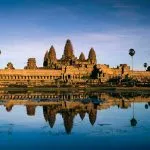
Pack a proper temple outfit rather than hoping to improvise with a beach cover-up. At Angkor’s sacred areas, visitors are expected to cover their shoulders and knees. A T-shirt or shirt that covers the shoulders, paired with trousers or a skirt below the knee, is the simplest option. The official Angkor Visitor Code of Conduct also advises respectful dress throughout the site.
Lightweight trousers are often the easiest all-round choice: they meet the dress requirements, protect against sun and mosquitoes, and are more practical than a long skirt on steep stone steps or in a tuk-tuk. Wear shoes with secure straps or light trainers for temple days, as paths may be sandy, uneven, or slippery after rain.
For more detail before a Siem Reap visit, see our Angkor Wat dress code guide.
Footwear: bring more than flip-flops
Flip-flops are useful for beach accommodation, showers, and short walks on sand, but they are not the best single shoe for Cambodia. Pack one pair of comfortable walking shoes or supportive sandals with straps for temples, city walking, and countryside excursions.
In the rainy season, footwear with grip becomes more important. Wet paving, muddy paths, and slick temple stones are uncomfortable in smooth-soled sandals. Avoid bringing brand-new shoes that have not been broken in; blisters are more difficult to deal with when you are walking in heat every day.
Island and ferry packing for Koh Rong and Koh Rong Samloem
For a beach extension, add swimwear, a rash vest if you burn easily, a reusable water bottle, and a compact dry bag or waterproof pouch. Keep your phone, passport, medication, and electronics protected separately from your main luggage. Even on a calm crossing, bags may be exposed to rain, spray, wet jetties, or sand.
Choose sandals that can cope with getting wet, and take a small torch or head torch if you are staying somewhere with limited lighting after dark. A power bank is also useful when your day is spent away from your room.
Ferry services and sea conditions can be more variable during the wetter months, so keep essential medication, valuables, and a change of clothes in your hand luggage rather than at the bottom of a large suitcase. Before travelling, check the latest arrangements with your accommodation and ferry operator. Our guide to getting to Koh Rong and Koh Rong Samloem explains the main arrival points and why it is important to know which beach your hotel is on before you leave Sihanoukville.
What to pack for Cambodia’s rainy season
Cambodia’s wetter, greener season generally runs from May to October. Rain does not necessarily mean continuous rain every day, but showers can be heavy, and September and October are often among the wettest months. Conditions vary by region, and coastal and island boat travel may be more affected than city sightseeing.
A thin poncho is usually more useful than a bulky waterproof jacket in tropical heat. Add a compact umbrella, a rain cover for your daypack, and several resealable bags for documents, cables, and spare clothing. Quick-drying clothes are far more useful than heavy cotton items that stay damp for hours.
For island-specific seasonal planning, read our Koh Rong weather guide, but always check the short-term forecast and your transport arrangements shortly before departure.
Sun, mosquitoes, and a small health kit
Bring broad-spectrum sunscreen, sunglasses, and a hat with a brim. Sun exposure can be intense on temple tours, open roads, beaches, and boats, even when the sky is overcast. Reapply sunscreen after swimming and sweating, and keep drinking water with you on full-day excursions.
Insect repellent is worth packing, particularly for evenings, rural stays, and the rainy season. The US CDC advises covering exposed skin where practical and using an appropriate repellent. It also recommends that travellers discuss destination-specific vaccines, medicines, and health needs with a clinician before departure. See its current Cambodia traveller health guidance for the latest advice.
Bring enough prescription medication for the whole trip, in its original packaging where possible, plus a basic kit with plasters, antiseptic wipes, rehydration salts, and any personal remedies you know you need. Do not rely on finding an exact replacement for a prescription, specialist skincare product, or particular medication once you are on a remote island.
Power, phones, money, and documents
Cambodia’s electricity supply is generally 230V, 50Hz. Socket styles can vary, so a universal adapter is the most flexible option. Check the label on chargers before travelling: most modern phone, camera, and laptop chargers accept 100–240V, but appliances designed only for lower-voltage systems may require a voltage converter or should be left at home.
Pack a power bank for long travel days, and carry a spare charging cable. Keep digital and paper copies of your passport, travel insurance, onward travel details, and any required arrival or visa documents in a secure, waterproof place. A small cross-body bag or daypack is more useful than repeatedly opening your main suitcase in stations, ferry terminals, and hotel lobbies.
What is easier to buy locally, and what is better to bring
In Phnom Penh, Siem Reap, Kampot, and Sihanoukville, travellers can usually find basic toiletries, bottled water, inexpensive rain ponchos, simple clothing, and everyday travel items. Availability can be more limited on smaller islands and in remote areas, so buy essentials before leaving larger towns.
Bring the things where fit, quality, or familiarity matters: prescription medication, your preferred sunscreen or skincare, comfortable footwear, swimwear that fits properly, a reliable travel adapter, glasses or contact lenses, and specialist camera or work equipment.
The key point
The best Cambodia packing list is light but not beach-only: bring breathable everyday clothes, one modest outfit that fully covers shoulders and knees, footwear with grip, rain protection, sun and mosquito protection, and waterproof storage for island and ferry days. Pack for heat first, then add small layers and practical protection for temples, transport, and changing weather.
Comments