

For most first-time visitors, Battambang is worth at least two nights. Cambodia’s north-western city combines heritage streets, rural scenery, Angkor-era temples, a short bamboo train ride, and the evening bat flight at Phnom Sampov.
A practical approach is to keep the city centre for a slow morning, then dedicate one afternoon to the countryside south and south-west of town. This gives you time for the bamboo train, a temple or two, and Phnom Sampov at dusk without rushing between sites in the midday heat.
The best things to do in Battambang
Ride the Battambang bamboo train
The bamboo train, often called a norry, remains one of Battambang’s most distinctive activities. It is now a purpose-built visitor attraction in the countryside near Phnom Banan, rather than the old improvised service that once used the main railway line, but it is still an open-air way to see rice fields and village scenery.
Expect a short, bumpy ride rather than a full railway journey. It works best as one stop on a half-day tuk-tuk outing, combined with Phnom Banan and Phnom Sampov. Keep phones and cameras secure, and consider skipping it if you have a back condition or would find a jolting ride uncomfortable.
Tickets are usually arranged on arrival, but operating times, prices, and the exact departure point can change. Ask your accommodation or driver to confirm current details on the day, particularly during heavy rain or quieter periods.
Watch the bats leave Phnom Sampov at dusk
Phnom Sampov is an important late-afternoon stop. This limestone hill has a pagoda, viewpoints, natural caves, and a difficult but significant Khmer Rouge history. The Killing Caves contain memorials to victims of the regime; visit quietly, dress respectfully, and allow time to take in the site rather than treating it as a quick photo stop.
Near sunset, large numbers of bats stream out of a cave on the side of the hill to feed across the countryside. The timing changes with daylight, weather, and season, so arrive well before sunset and ask locally when the flight is expected that evening. There are roadside places to sit and buy a drink, but it is still worth bringing water and insect repellent.
Phnom Sampov is around 12 kilometres south-west of Battambang. It is usually most practical to visit by tuk-tuk as part of a countryside circuit, rather than trying to cycle there after a full day in the heat.
Climb to Prasat Banan
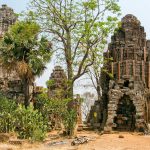
Prasat Banan is an Angkor-era temple on a hill south of Battambang. The setting is a large part of the appeal: after the climb, the views stretch over palms, fields, villages, and the Sangker River landscape below.
It is a good choice for travellers who want a temple experience away from the scale and crowds of Angkor. The climb is steep and exposed, however, so go early or later in the afternoon, wear shoes with grip, and take water. It combines naturally with the bamboo train because both are in the same broader southern countryside area.
Do not confuse Phnom Banan with Phnom Sampov: both are hill sites south of the city, but Phnom Banan is the temple-and-viewpoint stop, while Phnom Sampov is the best place for the bat flight and Khmer Rouge memorial caves.
Explore Battambang’s old centre on foot or by bicycle
Give the city itself a proper morning. Battambang’s most appealing streets sit around the river, market area, and older commercial quarters, where shophouses and colonial-era buildings reflect the city’s long role as a trading centre. The pace is generally calmer than Phnom Penh or Siem Reap, making it well suited to an unhurried walk.
Start early, when the streets are cooler and the market is active. A bicycle is useful for covering more ground, although a walking route is easier if you want to stop for coffee, browse local shops, or spend time looking at the architecture. Keep aware of traffic at junctions, and avoid cycling on rural roads after dark.
Visit Wat Ek Phnom if you have a second day
Wat Ek Phnom, north of Battambang, pairs a modern Buddhist pagoda with the remains of an 11th-century Angkorian temple. It is a worthwhile alternative if you enjoy historic sites but do not need another hill climb after Phnom Banan.
Treat this as a separate morning trip by tuk-tuk or bicycle, depending on your confidence, the weather, and how much time you have.
See Battambang’s contemporary arts scene at Phare Ponleu Selpak
Phare Ponleu Selpak is a Battambang-based Cambodian arts organisation and school, with programmes in visual art, performance, music, circus, and community support. A guided campus tour adds useful context to the city’s creative side and is a meaningful option if you have an extra morning or afternoon.
Tour and performance arrangements are set by the organisation, so book directly and check the latest times before planning your day. See Phare Ponleu Selpak’s campus tours and its circus-show page for current information.
A sensible Battambang sightseeing plan
Trying to fit every attraction into a single day can leave you spending more time in a tuk-tuk than enjoying the places you came to see. Two days is a sensible length of stay for most travellers.
| Time available | Best use of it |
|---|---|
| One full day | City-centre walk in the morning; bamboo train and Phnom Sampov in the afternoon, finishing with the bats. |
| Two nights | Add Phnom Banan, Wat Ek Phnom, or a Phare Ponleu Selpak campus visit without rushing. |
| Three nights | Choose a slower pace, add cycling or a rural tour, and leave room for cafés, food, and an art activity. |
Suggested countryside afternoon: arrange a tuk-tuk after lunch, ride the bamboo train first, continue to Phnom Banan if you want the temple climb, then reach Phnom Sampov well before sunset. If you include both temple hills, start earlier and be realistic about the heat and walking involved.
Suggested second morning: explore the city centre, then choose either Wat Ek Phnom for another historic site or Phare Ponleu Selpak for a contemporary cultural experience.
Getting around Battambang
Central Battambang is compact enough to walk, and bicycles are useful for short trips in and around town. The major attractions are outside the centre, though, so a tuk-tuk is generally the simplest option for the bamboo train, Phnom Banan, Phnom Sampov, and Wat Ek Phnom.
Agree the itinerary, waiting time, return journey, and total fare before setting off. For an afternoon ending at the bat cave, make sure the driver understands that you will need transport back after dark. If you are travelling alone, a small-group tour can be a practical alternative, but ask exactly which sites are included and whether entrance fees are extra.
For arrival planning, see our guides to travelling from Siem Reap to Battambang and travelling from Phnom Penh to Battambang. Intercity departure times and operators can change, so reconfirm shortly before travel.
When to visit Battambang
The driest and generally most comfortable period is roughly November to February, although this is also a popular time to travel. March to May can be intensely hot, making early starts and a long midday break important. During the rainy season, usually around May to October, the countryside is greener and quieter, but afternoon downpours can slow rural travel and make unsealed paths slippery.
Rain does not necessarily spoil a Battambang trip, but leave extra flexibility if you are planning to cycle or visit outdoor attractions. Cambodia’s official travel advice outlines the country’s broad wet and dry seasonal pattern; check the local forecast close to your visit rather than relying on seasonal averages alone.
What to bring for a Battambang countryside day
- Modest clothing that covers shoulders and knees for pagodas and temple sites.
- Comfortable footwear with grip for Phnom Banan and Phnom Sampov.
- Water, sun protection, and a light layer or rain cover, depending on the season.
- Insect repellent for the bat cave area at dusk.
- Small notes in Cambodian riel and clean US dollars for local purchases, drivers, and admission charges.
The key point
The bamboo train and Phnom Sampov bat cave are Battambang’s two standout experiences, but the city is more rewarding when you also make time for its heritage streets, rural temples, and arts scene. Stay two nights if you can: use one afternoon for the southern countryside and sunset bats, then keep another morning or day for the city, Wat Ek Phnom, or Phare Ponleu Selpak. For more background on the destination, see our Battambang travel guide.

Comments